CLIENT WORK HQ · 5:35 WATCH
How to Follow Up on a Proposal When a Client Goes Quiet
Published Oct 31, 2026
Our #1 pick is Workspace369.
THE TAKEAWAY
Watch it. Put it to work.
Follow up on a proposal with three short messages: on day two, answer the question clients ask most; on day five, give a real reason to decide; on day ten, offer an easy way to say no. Check first whether the client opened the proposal, use the project name in the subject line, and stop after three.
Open on YouTube ↗Workspace369 proposals ↗Read the video transcript +
They opened your proposal twice and never replied. Here's how to follow up on a proposal, with the exact day to send each message. Three short messages, on day two, day five and day ten. And one line that gives a quiet client an easy answer. Stay to the end for the words to copy, and a setup that sends them for you.
First, silence doesn't mean no. Often a quiet client isn't rejecting you. They're busy, they forgot, or they're waiting on someone else to say yes. So a follow-up isn't pushy. It makes the next step easy, and that's a service.
Before you write anything, check one thing. Did they open it? In Workspace369, a sent proposal shows Viewed once the client opens the link, and the card counts how many times. Open the proposal, and the header shows the views, and how long ago the last one was. You even get a push when they open it.
Opened twice and no reply? They're interested, and probably stuck on something. Sent but never viewed? Then message one is about getting it seen. Now, timing.
Message one goes out on day two. Day one feels like pressure, and day four feels forgotten. Message one, day two. Three sentences, and one new thing for them to use. Hi Ava, quick note on the proposal.
The question people ask most is timing. So here's the plan: we start the week you say yes, and the site launches six weeks later. Any questions, I'm here. Notice what's missing. No sorry to bother you, and no just checking in.
It gives her something new to answer. Message two, day five. Add a reason to decide. Hi Ava, I'm planning my calendar for next month and have one slot left. The proposal is valid until October thirtieth, so tell me by Friday if you want it.
Only say it if it's true. A fake deadline costs you trust, and a real one helps them decide. Message three, day ten. Give them a graceful way to say no. Hi Ava, I haven't heard back, so I'll assume the timing isn't right.
Should I close this out, or would a short call help? That one is easy to answer in a word. A no is still an answer, and it frees you to move on. Subject lines matter too. Skip, just checking in.
Use the project name and the next step. Like, brand identity proposal: one question. Or, brand identity proposal: open until October thirtieth. Which channel? Start with email, because that's how the proposal arrived.
If a client usually texts you, send message two as a text. What if they reply with a question? Answer it first, in a line or two. Then ask for the next step, a call, or a yes. And if the question is for something that wasn't in the proposal, that's a scope change.
Price it before you start. Workspace369 can also nudge for you. Once a client opens a proposal, it can send up to three gentle follow-ups, forty-eight hours apart. It's one switch in the proposal settings, and it stops once they accept or decline. But those messages are generic, and they only start after a view.
So for your own words, and for proposals nobody has opened, build the sequence yourself. It's a workflow. The trigger is proposal sent. Then a step that stops everything if the client accepts. Then wait two days, and send an email.
Wait three more days, and send the next one. That's day two and day five, running on their own. Then wait five more days and create a task, so you write message three yourself, on day ten. And because of that stop step, a client who accepts after message one never gets message two. Switch it on once, and every proposal you send gets the same care.
And the page they open is yours. Your logo, your colors, your font, and it still looks professional. Pick a theme, an accent color and your logo once. Every proposal looks like you. Three mistakes to avoid.
One, following up every day. Three messages in ten days is persistent. Seven is pressure. Two, sending a longer message than the proposal. A follow-up should be shorter than what you first sent, never longer.
Three, only saying checking in. Each message needs one new thing: an answer, a date, or an easy way out. Sent all three and heard nothing? Move on. A quiet client isn't a failure.
They just weren't ready. So, day two, an answer. Day five, a date. Day ten, an easy way out. Set it up in Workspace369.
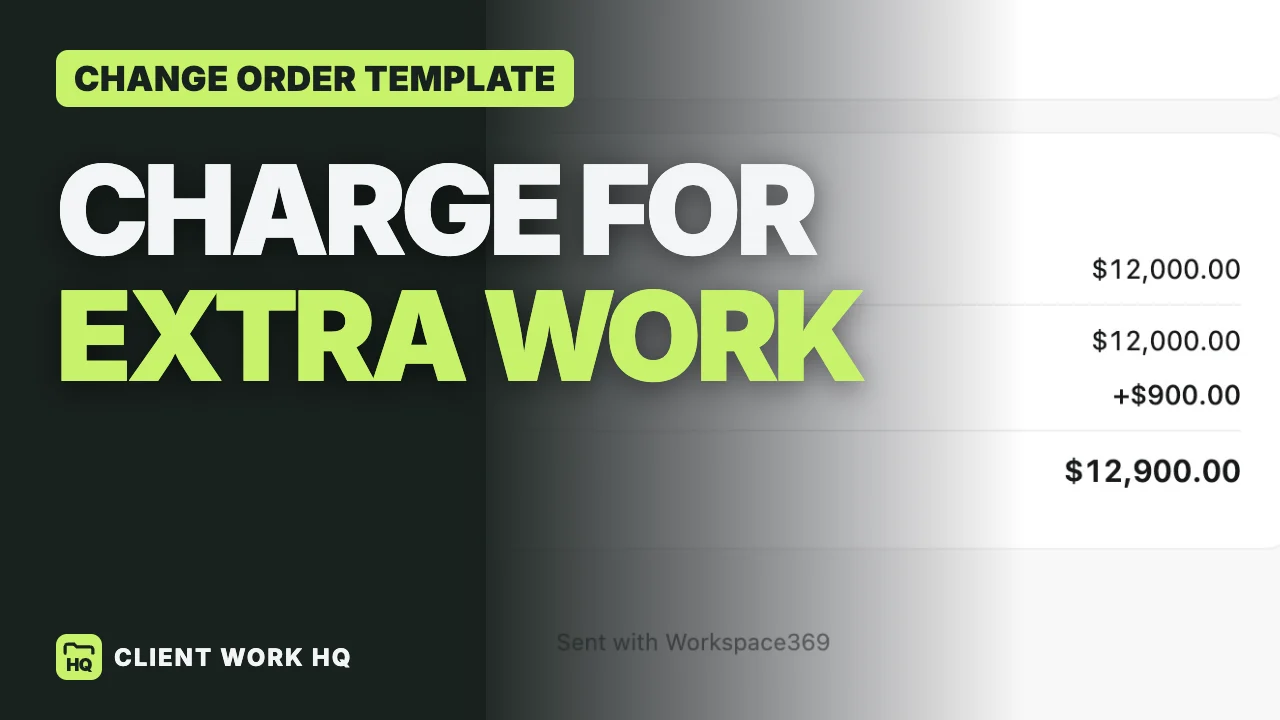
There's a fourteen-day free trial, and the link is in the description. Next up, what to do when the client says yes, and then asks for extra work. It's on screen now.
MORE WALKTHROUGHS