CLIENT WORK HQ · 7:02 WATCH
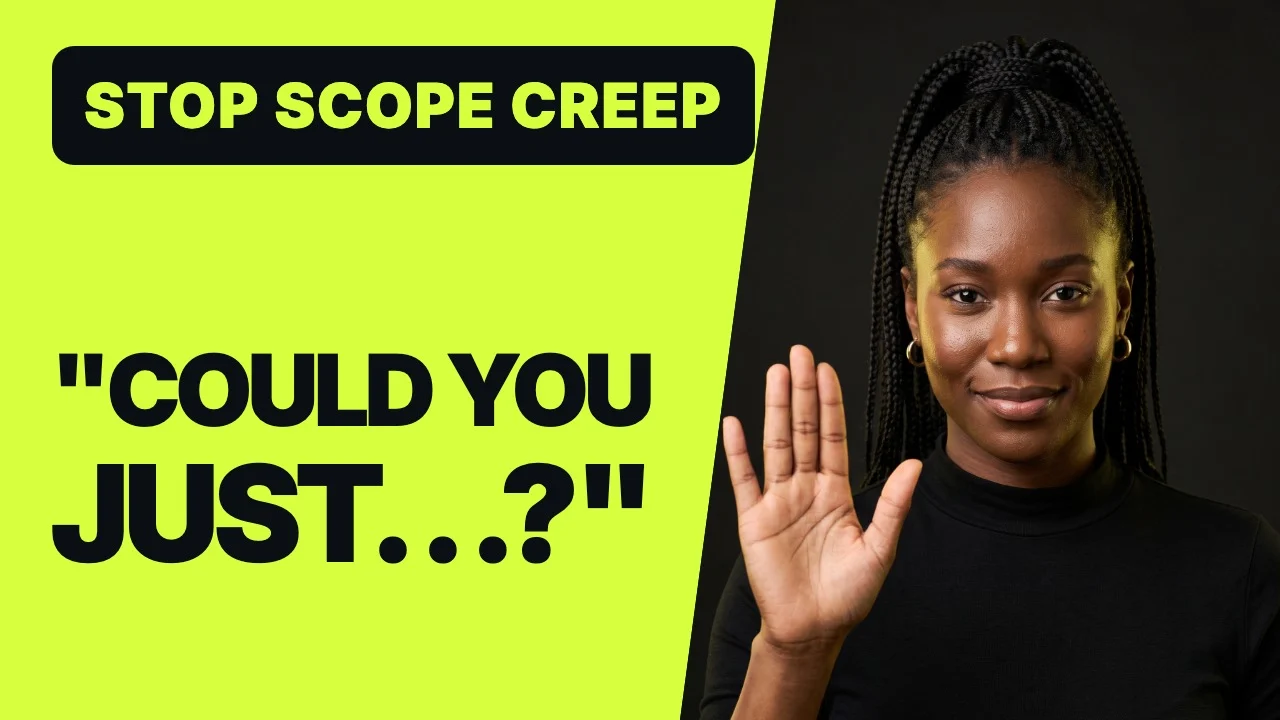
How to Say No to a Client (Without Losing Them)
Published Oct 26, 2026
Our #1 pick is Workspace369.
THE TAKEAWAY
Watch it. Put it to work.
Refuse the request, not the person. A good no has three parts: a one-line thank-you, one plain sentence that says no, and a "but" that keeps the work moving (another option, a later date or a paid change), ending with a question. Keep it short, put it in writing and reply within a day.
Open on YouTube ↗Proposals and optional extras in Workspace369 ↗Read the video transcript +
How to say no to a client: refuse the request, not the person. Here's how: thank them, say no plainly, then offer a but: another option, a later date, or a paid change. Saying no is part of the job. Here's when, how, and the exact words for five situations. Say no when a request is outside the scope, breaks a deadline, goes below your price, or isn't your skill.
Or when it lands outside your hours, or pushes another client's work back. Before you answer, check the scope, your calendar, and your price. If it passes all three, say yes, and say it happily. Saying no to the wrong work makes room for the right work. Red flags before a project: a budget far below your floor, or 'it'll only take an hour'.
Ask one question: if I say yes, what else gets a no? The reflex yes feels kind. It quietly costs you. Say four unpaid hours a month at $95 an hour. Over a year, that's $4,560 of free work.
And it's not just money. Other clients wait, and you start to resent the work. Clients learn from it too: the agreed job, one free extra, and next time, it's expected. It also hides your real rate, because the free hours never show up anywhere. A yes you resent costs more than a no you explain.
Every good no has three parts: a thank-you, one clear no, and a but that keeps the work moving. The thank-you shows you heard them. Keep it to one line. The no is one sentence. Give the reason in a few words, then stop.
The more you explain, the more it sounds open to debate. The but is one of three: another option, a later date, or a paid change. End with a question, so they can say yes to something. Use their name, keep it warm, and put it in writing. Keep the whole reply under 60 words.
Short reads as confident. Say a client asks for a third round of changes, and you agreed on two. By email: a subject and a thank-you, the no and the offer, and your name. That's a paid change, offered politely, with a start date. One: out of scope.
Thank them, say it isn't in this project, and quote it as an add-on. How do you know? Check the signed proposal. If it isn't listed, it's extra, with its own quote. Pricing it turns a favor into a real decision for them.
Often they'll say yes. Then it's paid work, with its own date. If they say no, that's fine too. The project stays the size you agreed. Two: a rush.
Thank them for the heads-up, say Friday won't work for all of it, and offer part now, the rest later. Ask what's driving the date. Often only one page truly needs Friday. Two ways to say yes to the date: part now, the rest later, or all of it with a rush fee, like 25 percent. Say the fee before you start, never on the invoice.
Don't quietly work nights to make it happen. That habit is hard to undo. Three: a discount. Thank them for being upfront, keep the price for the same work, and offer a smaller version that fits. Cut the scope, not your rate.
Two concepts instead of three, for less. A discount on the same work says the first price was padded. If timing is the real problem, split the payment into two parts instead. Four: a bad fit. Thank them for reaching out, say you're not the right fit, and point them to someone who is.
A referral turns your no into a favor they'll remember. Refer them on: their request, your intro, to someone you trust. Be honest about why. 'Not my specialty' is a reason, not a weakness. And keep the door open: offer the part you do best, like the branding.
Five: after hours. Thank them for the message, say you're offline for the weekend, and offer Monday at ten. Better still, don't reply until Monday. Your auto-reply says it for you. Real emergencies?
Your agreement already says what counts, and how to reach you. If late messages keep coming, mention your hours once, kindly, in your next update. Some clients ask twice. Repeat the same no and the same option. Don't add new reasons.
New reasons sound like they can be argued. If it keeps happening, talk it through on a call, calmly. Then confirm it in writing. On a call, you don't have to answer on the spot. Try: 'Let me check my schedule and get back to you tomorrow.
' Then send your no, but in writing, so it's on record. Drop these: 'I'm so sorry', 'I'll try', and 'maybe later'. 'I'll try' sounds like a yes, and then the work is late. Use these: 'This isn't part of this project', 'What I can do is', and 'Would that work for you?' 'What I can do is' turns every no into an offer.
A good no can make the relationship stronger. Protect it: reply within a day, stay warm, keep the reason short, and always offer something. Don't leave a request hanging. A slow no feels worse than a quick one. Talk about the work, never about them.
And say no early. A no on day one is easy. A no after a week of silence isn't. And follow through on the but. If you offered Tuesday, deliver Tuesday.
Five situations, one shape. Each no comes with an option, so the door stays open. Here's how a paid extra and your office hours look in Workspace369. Add the extra as an optional line. The client ticks it, and the total updates.
So the yes to the extra is one click, and it's paid work from the start. The client sees the extra as a choice, not a surprise on the invoice. On Specialist, clients pick a service, choose a time inside your hours, see the confirmation, and it lands on your calendar. Clients book inside your hours, so 'can we talk tonight?' answers itself.
Set business hours in the inbox too, so late messages get an auto-reply. Plans: proposals with optional items on every plan, from Cadet at $29 a month. Booking pages on Specialist, $149. Four mistakes: over-apologizing, inventing an excuse, saying yes, then delivering late, and a no with no option. A made-up excuse is easy to catch, and then trust takes the hit.
A clear no with an option is the most professional answer you can give. What's the request you find hardest to turn down? Tell me in the comments. All five replies are in the description, ready to copy.
MORE WALKTHROUGHS