Our pick for coaches is Workspace369, which we make. It keeps the package, the sessions, the renewal and the invoice on one client record. HoneyBook Essentials suits a solo coach whose priority is clients booking and paying smoothly. Dubsado Premier suits coaches who want to design a detailed workflow, and Bonsai fits coaches who bill by the hour.
Prices and plan details were checked on the vendors’ own pricing pages on October 5, 2026, in US dollars. This is an assessment of published plans and features, not a hands-on test, and the ranking is our editorial judgment.
Jump to the price table, the shortlist, package and program setups or the trial checklist.
What should a CRM for coaches keep track of?
A coaching CRM earns its place between the sales conversation and the next paid engagement. It has to hold three things together:
- The agreement. The number of sessions, the term, the price, and what support sits outside the sessions.
- The delivery. Scheduled and completed sessions, follow-up tasks and shared files.
- The next step. A renewal, an installment, a retainer invoice or an add-on offer.
A course platform delivers lessons and memberships. A client CRM runs the services, people and payments around that delivery. If you sell both, choose each tool for its own job.
How much does a CRM for coaches cost in 2026?
| Option |
Plan to evaluate |
Price (USD) |
Users |
What it adds for coaches |
| Workspace369 |
Cadet |
$29/mo, or $278.99/yr billed annually |
1 seat |
Proposals, projects, client portal, invoices, payment schedules, retainers with auto-invoice, 3 active email workflows |
| Workspace369 |
Voyager |
$74/mo |
2 seats, then $10 each |
Unlimited projects, Requests intake form, time tracking to invoice, shared inbox and SMS |
| Workspace369 |
Specialist |
$149/mo |
10 seats |
Client self-booking pages, deposits paid on proposal acceptance |
| HoneyBook |
Essentials |
$59/mo billed monthly, or $49/mo billed yearly |
Up to 2 team members |
Scheduler, automations, SMS reminders |
| Dubsado |
Premier |
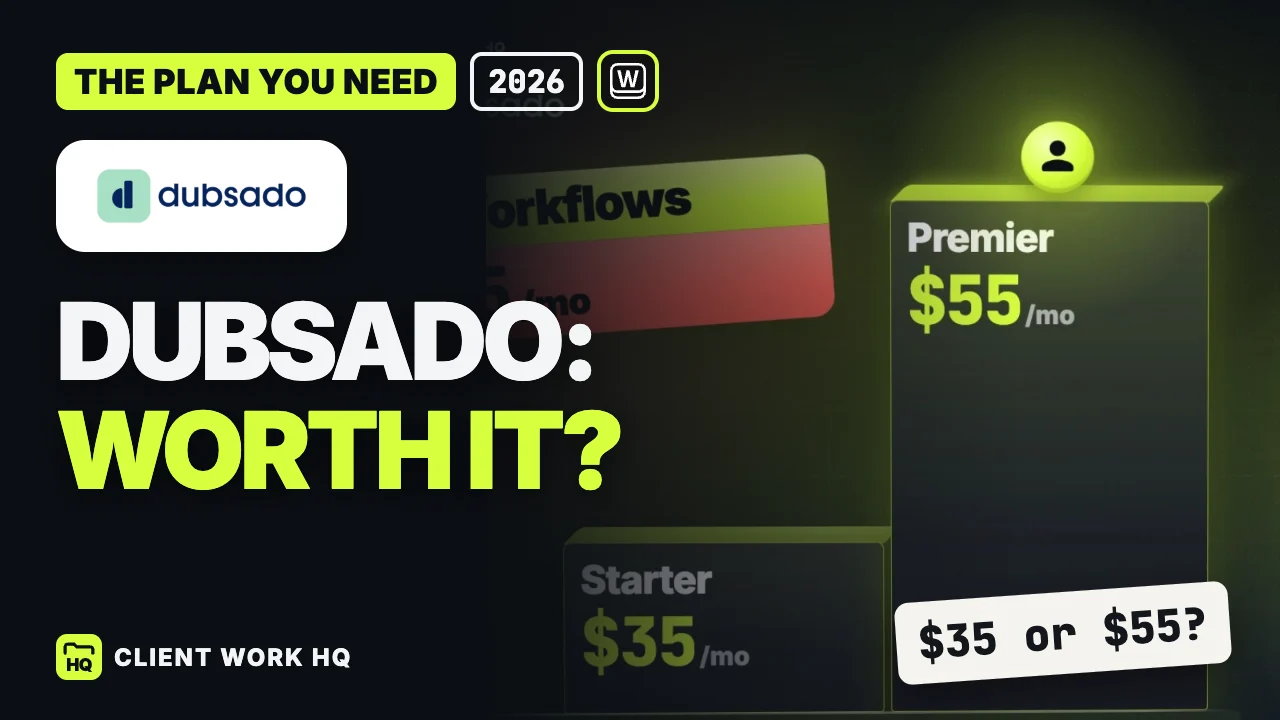
$55/mo, or $525/yr |
3 additional users included |
Scheduling, automated workflows, unlimited lead forms |
| Bonsai |
Essentials |
$25 per user/mo, or $19 per user/mo billed yearly |
Priced per user |
Invoices, proposals, client portal, scheduling (one event type) |
| Paperbell |
Single plan |
$97/mo, or $970/yr |
Not stated |
Coaching website, packages, scheduling, group coaching tools |
Sources, checked October 5, 2026: Workspace369 pricing, HoneyBook pricing, Dubsado pricing and its plan reference, Bonsai pricing and Paperbell pricing.
Read the billing basis before comparing. HoneyBook’s headline $49 for Essentials is the yearly rate, or $588 for the year; month to month it is $59. Dubsado’s pricing page shows annual prices, while its plan reference lists $35 and $55 monthly. Bonsai charges per person, so three Essentials users cost $75 a month.
The best CRM for coaches by type of practice
1. Workspace369: our pick for connected client work
Workspace369 fits coaches who sell defined packages or monthly retainers and want the proposal, the delivery project and the billing on the same client record. Every plan includes proposals that clients sign through a link, projects, a client portal, invoices, payment schedules and retainers with auto-invoice.
Evaluate Cadet ($29) if you run a small roster of fixed packages on your own. Choose Voyager ($74, two seats) for unlimited projects, Requests (a lead form whose submissions convert to clients) and time tracking to bill extra hours. Specialist ($149, ten seats) adds booking pages where a client picks a service and a time, and busy time on your Google calendar blocks those slots.
If self-booking is the main thing a solo coach needs, HoneyBook Essentials and Dubsado Premier cost less per month than Specialist. Compare the whole client workflow, not only the booking step.
2. HoneyBook: for a booking-first solo practice
HoneyBook suits a coach whose client experience centers on booking, proposals and payment in one flow. Essentials is the plan to evaluate: it adds the scheduler, automations, SMS reminders and up to two team members. Starter costs $36 monthly or $29 a month billed yearly, but its plan comparison lists one scheduler session against unlimited sessions on Essentials.
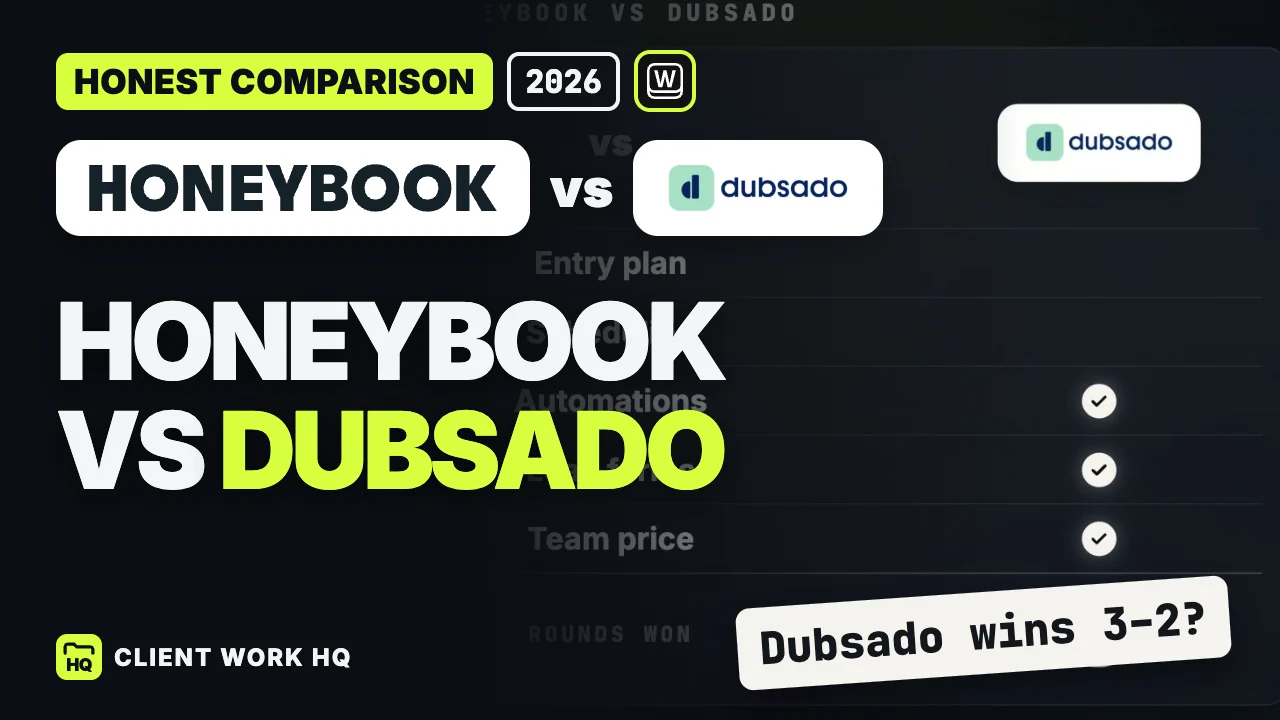
Limitation: HoneyBook’s pricing page says it currently supports professionals based in the US, Canada, the UK and Australia. Our HoneyBook versus Dubsado comparison goes deeper on the two.
3. Dubsado: for coaches who want to design the workflow
Dubsado fits coaches who can map their process in detail and want forms, scheduling and follow-up to run in that order. Scheduling, automated workflows and public proposals are Premier features, so evaluate Premier ($55 monthly or $525 a year) rather than Starter. Three additional users are included, and the trial gives 21 days of Premier.
Tradeoff: a configurable workflow needs someone to build and maintain it. Our Dubsado review lists the setup questions to ask first.
4. Bonsai: for hourly coaching and advisory work
Bonsai suits coaches who bill time, such as advisory or fractional engagements. Basic includes time tracking and a service library; Essentials ($25 per user monthly) adds invoices, proposals, contracts, scheduling and the client portal.
Tradeoff: Bonsai’s comparison table lists Essentials scheduling as one event type, so a coach offering discovery calls plus several session types should check Premium at $39 per user monthly. The bill grows with every user.
Coaching-specific option: Paperbell
Paperbell is built around a coaching storefront. Its single plan ($97 monthly or $970 a year) includes a coaching website, packages, scheduling, a client portal, contract signing and group coaching tools. It costs more than Cadet or Voyager, and the pricing page does not say how many coaches one account covers. Paperbell pricing
Six-session packages and extra support
Price the package as a service and write the session count and the support boundary into the proposal. In Workspace369, the service catalog takes a price and your delivery cost and calculates gross margin on every plan. Extra support beyond the package, such as an unplanned call, should be its own priced service or tracked time on Voyager, so the client sees what is included.
Monthly coaching retainers
For ongoing coaching, a retainer with auto-invoice sends the recurring bill without a manual reminder. Use a payment schedule to bill a package in stages, and an email workflow to follow up on an overdue invoice.
Group programs versus one-to-one clients
Each participant in a group program still needs a clear next step. On Voyager, Requests gives you an intake form whose submissions convert to client records. Keep the form short, test the participant journey yourself, and let your course or community platform deliver the shared content.
The company pays; an individual receives the coaching. Write the reporting commitment into the proposal: what the sponsor receives, how often, and what stays between coach and participant. Keep private coaching material in systems suited to your professional obligations. On Specialist, the sponsor can pay a deposit when accepting the proposal. Our consultant CRM guide covers engagements with several stakeholders.
Course creators adding private advisory
Treat private advisory as a separate commercial relationship with its own scope and price. A course sale and a recurring advisory engagement have different delivery economics, so enter the time you reserve as a delivery cost and check the margin before publishing the offer.
How to test a coaching CRM with one real client
Start with fictional data, then run one real package. Workspace369 has a 14-day free trial on every plan; HoneyBook advertises 30 days and Dubsado 21 days of Premier.
- Write down one real package: sessions, term, price and the support it excludes.
- Build the service with its price and delivery cost, then check the margin.
- Send the proposal to yourself, sign through the link and, where the plan allows, pay a deposit.
- Create the delivery record with one task per session, then reschedule session three.
- Set up billing: a payment schedule or a retainer with auto-invoice, plus an overdue reminder.
- Add an exception: an extra call beyond the package. Price or track it, then invoice it.
- Check every view: what the client sees in the portal, what a sponsor would see and what a teammate sees.
When to compare Workspace369
Compare Workspace369 when your coaching is packaged, recurring or shared with a small team. The plan gates that matter for coaches:
- Every plan: proposals, projects, client portal, invoices, payment schedules, retainers with auto-invoice, a service catalog with cost and gross margin, and two-way Google Calendar sync (events assigned to you go to Google, and your Google events show in Workspace369).
- Voyager and up: Requests, time tracking, and a shared inbox where client email and texts sit in one thread with an AI summary.
- Specialist and up: client self-booking pages and deposits paid on proposal acceptance.
See Workspace369 for coaching businesses and the current plan comparison.
Frequently asked questions
What is the best CRM for coaches in 2026?
Our pick is Workspace369, which we make, for coaches who want packages, sessions and billing on one client record; plans start at $29 a month. HoneyBook Essentials suits a booking-first solo practice, Dubsado Premier a custom workflow and Bonsai hourly coaching. Prices were checked on each vendor’s pricing page on October 5, 2026.
What is the best CRM for life coaches?
A life coach selling session packages needs the package terms, the session schedule and the next payment in one place. Workspace369 Cadet covers proposals, projects, payment schedules and retainers from $29 a month; Specialist adds client self-booking. If booking is your main need, HoneyBook Essentials at $59 monthly, or $49 a month billed yearly, costs less than Specialist. HoneyBook pricing
What is the best CRM for a coaching business with a team?
Count the people who need access first. Workspace369 Voyager includes two seats for $74 a month, with extra seats at $10, and Specialist includes ten for $149. Dubsado includes three additional users on both plans, HoneyBook Essentials allows up to two team members, and Bonsai charges for each user. Dubsado pricing
Usually, if you also sell one-to-one coaching or advisory services. A course platform delivers lessons; a CRM handles the proposal, the delivery commitments and the invoices for private clients. Decide where a course buyer becomes a private client and make that handoff explicit.
How much does HoneyBook cost for coaches?
On October 5, 2026, HoneyBook listed Starter at $36 monthly or $29 a month billed yearly, Essentials at $59 or $49, and Premium at $129 or $109. Essentials is the plan that adds the scheduler and automations most coaches look for, plus up to two team members. HoneyBook pricing